
1. You pay top dollar for bottom of the barrel no-name imported brand canned and packaged food at the grocery store - when you can get them.
2. Your tap water is so full of chlorine that the kids' bath has a light green tint to it.
3. Your kid speaks at least two languages, and sometimes three, depending on what country you're living in at the time.
4. You have grown an affection for scenery filled with dirt roads, gutters and rice paddies.
5. You never walk anywhere anymore and you're no longer used to driving in vehicles that are not 4x4.
6. You expect to get a stomach bug about once every three to four months.
7. You buy meat the same day that the animal was killed and you age it in your refrigerator.
8. Your definition of a "really good restaurant" has evolved to being a restaurant whose food doesn't make you sick.
9. A chauffeur drives your kids to school every day.
10. You count down the days to Christmas vacation months ahead of time and can't wait to experience cold and snow.
Wednesday, 15 December 2010
You know you live in a developing country when
Thursday, 2 December 2010
Things our kids have seen and done this year


Our kids have seen a lot this year.
This summer, they looked down on this gorgeous view of the Dordogne river in the Périgord region of southwestern France. Even on a cloudy day, the scenery was beautiful.
They saw the countryside of Madagascar, too, which is beautiful in its own way.
 They saw the Eiffel Tower a few times, and took a boat ride along the Seine river in Paris.


 They saw their share of cameleons, tortoises and lemurs.
 They've gone for a ride on a taxi "pousse-pousse".

We haven't been able to continue the Bambina's swimming lessons here in Tananarive so instead, the she's been learning to ride a pony. The Bambino likes to just sit on the pony once in a while.

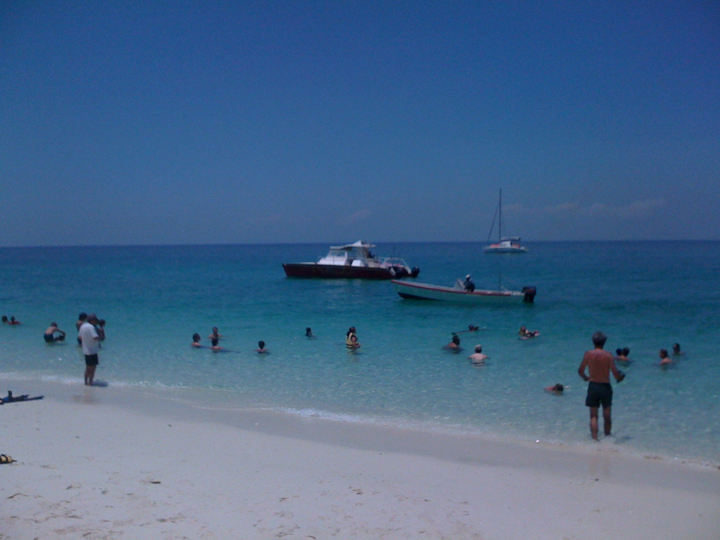
And they did a fair bit of swimming in the Indian Ocean (the Bambina did snorkeling and diving as well).

Our end of year treat: skiing in the Alps!
Sunday, 28 November 2010
Cozying Up to the Lemurs
Sometimes family travels take us to places that we never dreamed of. These photos were taken during a weekend at the Vakôna Forest Lodge in Andasibe, Madagascar. The lemurs were so used to having people around them that they regularly surprised us by leaping onto our shoulders, head and back and staying there for a bit. The Bambina was so afraid when a lemur went to leap onto her shoulder that she stepped backward and put her foot directly in the swamp.


Wednesday, 17 November 2010
The International Family's Never-Ending Dilemma : Is my child in the right school?

The number one question of the international family: Where should we send our children to school?
The number two question of the international family: Have we put our children in the right school?
Basically, the question is always on our minds.
Here in Tananarive, Madagascar, the choices of schools is VERY limited. You can send your child to the French school or you can send your child to the American school.
Pros of the American School, from our perspective:
- Great way to consolidate my children's English.
- It's close to home.
- It has small classes.
- It is more open to creativity and different learning styles than the French system.
- Thinking with an open and critical mind is just as important as coming up with the right answer.
- Thinking with an open and critical mind is just as important as coming up with the right answer.
- It has a great community feel to it.
- If offers lots of extra-curricular activities.
The American School has its disadvantages, too, though. It's very expensive. Their pre-K and kindergarten facilities are not great (in fact, they're downright shabby and small), some of the teachers are not native English speakers, and for an natural-mama type like me, their vaccine requirements are a little over the top.
Pros of the French school:
- Teaching the Bambina to read and write in French is something that I can't do and that the Frenchman won't do. This is close to being a deal-breaker point.
- It has an excellent kindergarten programme.
- Truly excellent teachers in kindergarten, first and second grade.
But the French school is a 30 minute drive away in the morning. And in the long run, French education may be rigourous but it also has the reputation for being narrow, closed-minded and not great for building confidence in children.
We chose the French school because at the time, the Bambina was only five years old when we arrive in Tana and the kindergarten at the French school was visibly better than the one at the American school. Now that she's in first grade, I'm sure that the American school is just as good, if not better. Neither school is perfect. Either one would leave us questioning our choice.
We chose the French school because at the time, the Bambina was only five years old when we arrive in Tana and the kindergarten at the French school was visibly better than the one at the American school. Now that she's in first grade, I'm sure that the American school is just as good, if not better. Neither school is perfect. Either one would leave us questioning our choice.
For our next expatriation, my prayer is that not only will we not be in a francophone country, but that we will be in a country where there is no lycée français, at that we will have no choice but to put the Bambina in a reputable international school that offers French for native speakers. Alternatively, sending her to a local school, should we be living in a developed, anglophone country (Australia, Scotland, the United States or Canada, for example) would also be interesting.
A Montessori school for the Bambino would be a cherry on the cake.
A Montessori school for the Bambino would be a cherry on the cake.
Wednesday, 3 November 2010
7 Globetrotter Family Travel Tips
1. Check everyone's passports once every six months. You never know when you're going to be on the road and you don't want to discover one week before your ski trip in the Alps that your five year old's passport has expired!

3. Bring your own airplane food for the kiddies. The Bambina won't touch airline food and I can't say I blame her. Aside from having a stale, refrigeration-like taste, it's rarely food that I like and it's full of preservatives.
3. Bring entertainment for the luggage wait. That Nintendo DS that you've been complaining about since last Christmas when your spouse insisted that your kid have one? Well, thank your lucky stars it exists just for times like this!
4. Bring a car seat or book a weight- appropriate car seat from the car rental or taxi cab company. Be sure to tell them that it must be already fully and correctly installed when the cab arrives to pick you up. We have had the unfortunate incident of a taxi showing up with a brand new, weight-appropriate car seat - uninstalled - and with no manual to show how to install it.
 5. Think twice before you take an only child trekking in the mountains - or anything else that requires physical endurance. Without the distraction of a playmate close in age to your little one, your child may start to complain that he or she is tired oh, about two minutes into the hike. Hiking with another family has worked well for us.
The same goes for museums or art exhibits - unless you have a child who is particularly into cultural visits, he or she may quickly get bored and start to complain, thereby ruining the visit for everyone else . Try to find another family with one or more children the same age for these kinds of visits.
 6. If you have an infant or toddler, bring a mei-tai baby carrier (Ergo, Kozy and Babyhawk are a few brands) on the trip with you, along with the stroller. It's very handy during when boarding the plane, during a luggage wait and for walking in quaint towns with cobblestone roads that make pushing a stroller difficult.
I don't recommend carriers such as Baby Bjorn, as the baby's weight is on your shoulders rather than your hips, and they therefore only work for small babies (that and the fact that the baby is essentially being supported on its genitals...).
7. Pack a sweater for you and each child. Always. Even if it's a beach vacation in the Bahamas!
Bon voyage!

The same goes for museums or art exhibits - unless you have a child who is particularly into cultural visits, he or she may quickly get bored and start to complain, thereby ruining the visit for everyone else . Try to find another family with one or more children the same age for these kinds of visits.
 6. If you have an infant or toddler, bring a mei-tai baby carrier (Ergo, Kozy and Babyhawk are a few brands) on the trip with you, along with the stroller. It's very handy during when boarding the plane, during a luggage wait and for walking in quaint towns with cobblestone roads that make pushing a stroller difficult.
 I don't recommend carriers such as Baby Bjorn, as the baby's weight is on your shoulders rather than your hips, and they therefore only work for small babies (that and the fact that the baby is essentially being supported on its genitals...).
7. Pack a sweater for you and each child. Always. Even if it's a beach vacation in the Bahamas!
Bon voyage!
Tuesday, 19 October 2010
Bilingual babies are less easily confused
BBC news recently posted an article about a study showing that bilingual children are less likely to get mixed up when forced to multitask.
The original study was published in the Proceedings of the National Academy of Sciences. The abstract describes the study as follows:
7-month-old infants, raised with 2 languages from birth, display improved cognitive control abilities compared with matched monolinguals. Whereas both monolinguals and bilinguals learned to respond to a speech or visual cue to anticipate a reward on one side of a screen, only bilinguals succeeded in redirecting their anticipatory looks when the cue began signaling the reward on the opposite side. Bilingual infants rapidly suppressed their looks to the first location and learned the new response. These findings show that processing representations from 2 languages leads to a domain-general enhancement of the cognitive control system well before the onset of speech.Of course, the study only dealt with bilingual children who were exposed to two languages from birth, in a one-parent, one language environment. It would be interesting to study children who were exposed first to one language from zero to three years and then to a second language from age three, as a result of language immersion at school, for example.
Thursday, 14 October 2010
Nestlé at it again
I have been meaning to post on this story for quite some time. I have already written how Nestlé's Nido is harming African babies. Now I see that it's not just the Nido that's the problem.
A few months ago, I walked into a store that happens to be the official distributor for Nestlé products here in Tana. I saw this display.

The idea was obviously to display ALL Nestlé products together. The first thing that struck me was that the Nido had, once again, been placed in close proximity to the baby formula, Guigoz 1 and 2, but at least this time they were on different shelves.
Encircling the products was a yellow ribbon with a teddy bear decoration throughout and the following message:
"Nestlé - pour une croissance saine".
Translation: Nestlé: for healthy growth.
Apart from Nido, Guigoz formula and baby cereal, the display contained Kit Kat, Choco Crunch cereal, and Quik chocolate powder. All these products are supposed to be for "healthy growth". Surely they must be joking.
Behind the cashiers was a posterboard clearly intended for employees of the store. The posterboard had the Nestlé Nutrition logo on it and showed what employees are not allowed to do under the International Code on the Marketing of Breastmilk Substitutes. No promotions. No point of sale advertising. No special displays. There were diagrams indicating all these prohibitions but the writing was all in English. Have I mentioned that Madagascar is a francophone country?
I asked to speak to the manager of the store. I was led to his office. He was a pretty nice French guy. I had a friendly conversation with him and then said "I see that you are making an effort to adhere to the International Code for the Marketing of Breastmilk Substitutes."
I then explained that the display was in contravention of this Code. He expressed surprise and said that he would contact Nestlé immediately, as it was they who put up the display.
I thanked the manager, went to purchase my things, and left.
The next week, lo and behold, I got a call from Nestlé Nutrition.
"We would be interested in knowing why you think the display contravenes the Code. We are not marketing breastmilk substitutes. We are marketing all Nestlé products together."
He wasn't joking. This was his argument.
"Listen", I said. "If you are going to follow Nestlé's own watered-down interpretation of the Code, you will, at a minimum, remove the Nestlé Guigoz first stage infant formula from the display. And if you are going to follow my interpretation of the Code, you will remove the first and second stage Guigoz from the display."
He still didn't understand what was wrong with keeping them in the display.
"It's advertising", I said.
"But it's not advertising the formula in particular", he replied.
"That doesn't matter", I countered. "Putting baby formula in a display that says 'for healthy growth' is advertising the formula, whether or not you put a KitKat bar and breakfast cereal beside it."
He said he would like to meet me so that I could show him the relevant portions of the Code and he could explain to his superiors. I agreed and we met up the following week. By that time, the Nestlé Nutrition man had already faxed a photo of the display to his superiors in Kenya and Mauritius and asked for their opinion.
His superiors agreed with me and told him that either the milk had to be removed from the display or the ribbon had to be removed. He removed the ribbon.
I told him that he should also put the Nido milk with the other powdered milk being sold in the store rather than in the same area as the infant formula. He refused. He said that he wanted to keep the Nestlé products all together.
"But you know", he said to me, when we were back in his office at Nestlé Nutrition, "we don't really focus on stores. The stores are already informed and are generally compliant, with the odd exception now and then. Our main job is to inform hospitals about the Code, when we deliver them our infant formula for newborns".
Now ain't that a wolf in sheep's clothing.
Subscribe to:
Posts (Atom)


